That scattering of reddish-brown dust and stone flakes on your sidewalk isn't just cosmetic, it's your brownstone's soft sandstone facade telling you it's failing. When it's happening on your stoop, the surface that takes the most foot traffic and weather in the whole building, it becomes both a safety issue and, in NYC's historic districts, a compliance one. Here's what stoop repair actually involves, what it costs, the permit and Landmarks rules you can't skip, and how to keep a small problem from becoming a full rebuild.
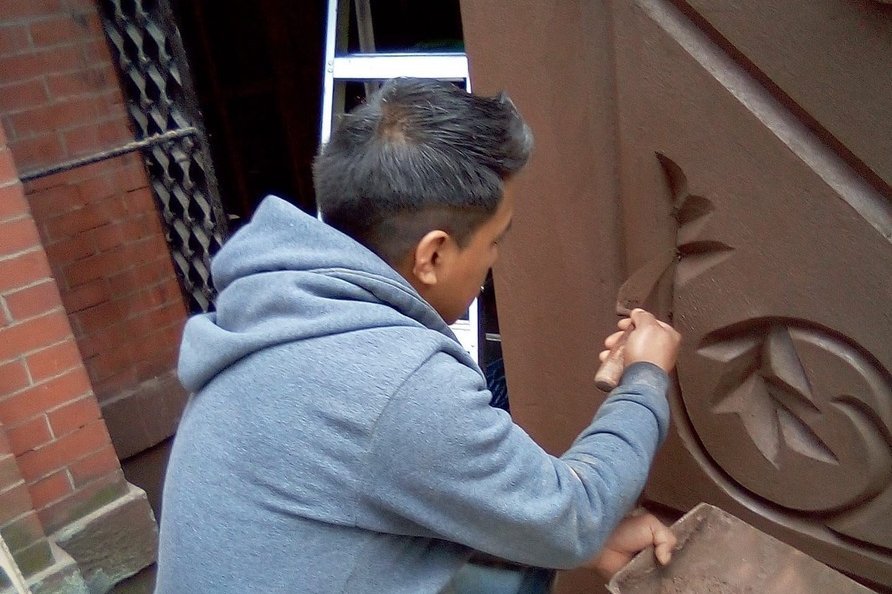
Brownstone is soft sandstone: beautiful, historic, and unfortunately vulnerable. New York's freeze-thaw cycle is constantly working against it. Water soaks into the porous stone, freezes, expands, and flakes the face off layer by layer. This is called spalling, and the reddish-brown grit on your steps and sidewalk is the evidence.
Stoops get it worst because they're horizontal, so they hold water instead of shedding it, they take constant foot traffic, and the original 19th-century stone has had over a century to weather. There's also a hidden accelerator: many older stoops were "repaired" at some point with a hard cement patch or the wrong coating, which traps moisture behind it and makes the stone underneath fail faster. Left alone, spalling treads become chipped, cracked, and eventually unsafe, and water works its way into the structure and the vault beneath.
Before anything else: do not power-wash your brownstone. This is the single most common way homeowners damage their own facade. High-pressure water is the number one enemy of soft sandstone. Contractors regularly see a homeowner rent a power washer to "clean up" before selling and strip away an eighth of an inch of the stone face in the process. What looks like cleaning is actually removing the very surface you're trying to preserve. Brownstone should be cleaned with low pressure and the right method, never a rented pressure washer, and never with harsh acidic cleaners that eat the stone.
Depending on the damage, stoop work falls into a few levels, and a good contractor will recommend the least invasive option that actually solves the problem:
The repair method matters as much as the scope. Options range from patching with color-matched consolidants and pigmented coatings, a popular middle-ground that gives a unified, professional appearance for a fraction of full stone replacement, up to true brownstone-to-brownstone or cast-stone replacement for severe damage. As with all masonry, the wrong mortar or patch mix accelerates deterioration, so matching materials to the original stone is essential rather than optional.
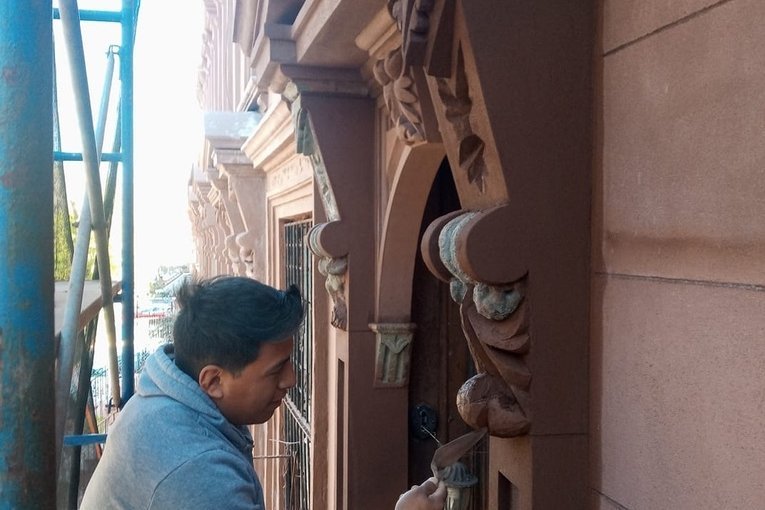
This is where brownstone work differs from ordinary masonry, and where DIY or an unqualified contractor gets you in trouble.
Landmarks Preservation Commission (LPC) approval. Most of brownstone Brooklyn, and much of Manhattan, sits inside designated historic districts: Park Slope, Brooklyn Heights, Cobble Hill, Carroll Gardens, Boerum Hill, Fort Greene, Clinton Hill, Bedford-Stuyvesant, and more. If your building is in one of these districts, you need LPC approval before any visible exterior work begins, including stoop repair, repointing, lintel work, and patching. Skipping it can mean fines and being forced to remove the work you just paid for.
DOB permits. Structural repairs, stoop replacements, and cornice work generally require Department of Buildings permits. Architectural drawings and filings for landmark properties add cost and time, but they keep the project legal and protect your resale.
Timeline reality. A typical facade or stoop restoration might take three to six weeks of actual work, but if LPC approval is required, add several weeks to a few months before work can even start. Custom cast-stone fabrication adds lead time on top of that. Plan for it rather than being surprised, and be wary of any contractor who offers to skip the approvals to "save time," because that's your liability, not theirs.
Many NYC stoops sit over a sidewalk vault, the underground space that extends under the sidewalk. If water has been getting into your failing stoop, it's often reaching the vault below too, where it can rot framing and cause leaks into the basement. It's worth having the waterproofing under the stoop checked during a rebuild, since you'll never have better access than when the stoop is already opened up. Handling both at once is far cheaper than reopening the stoop a year later to chase a vault leak.
A good restoration should last, but a few habits extend it:
Don't wait for a step to crumble under someone. Call for an inspection if you see:
At Brownstone Repair NYC we restore historic stoops with materials matched to your building, and we handle the LPC and DOB filings as part of the job, so your repair is both historically correct and fully compliant. If your stoop is spalling or cracking, the sooner it's addressed, the less stone you lose and the less it costs to fix.
